Article: Can Black Skin Get Chemical Peels? What’s Actually Safe—and What Isn’t?
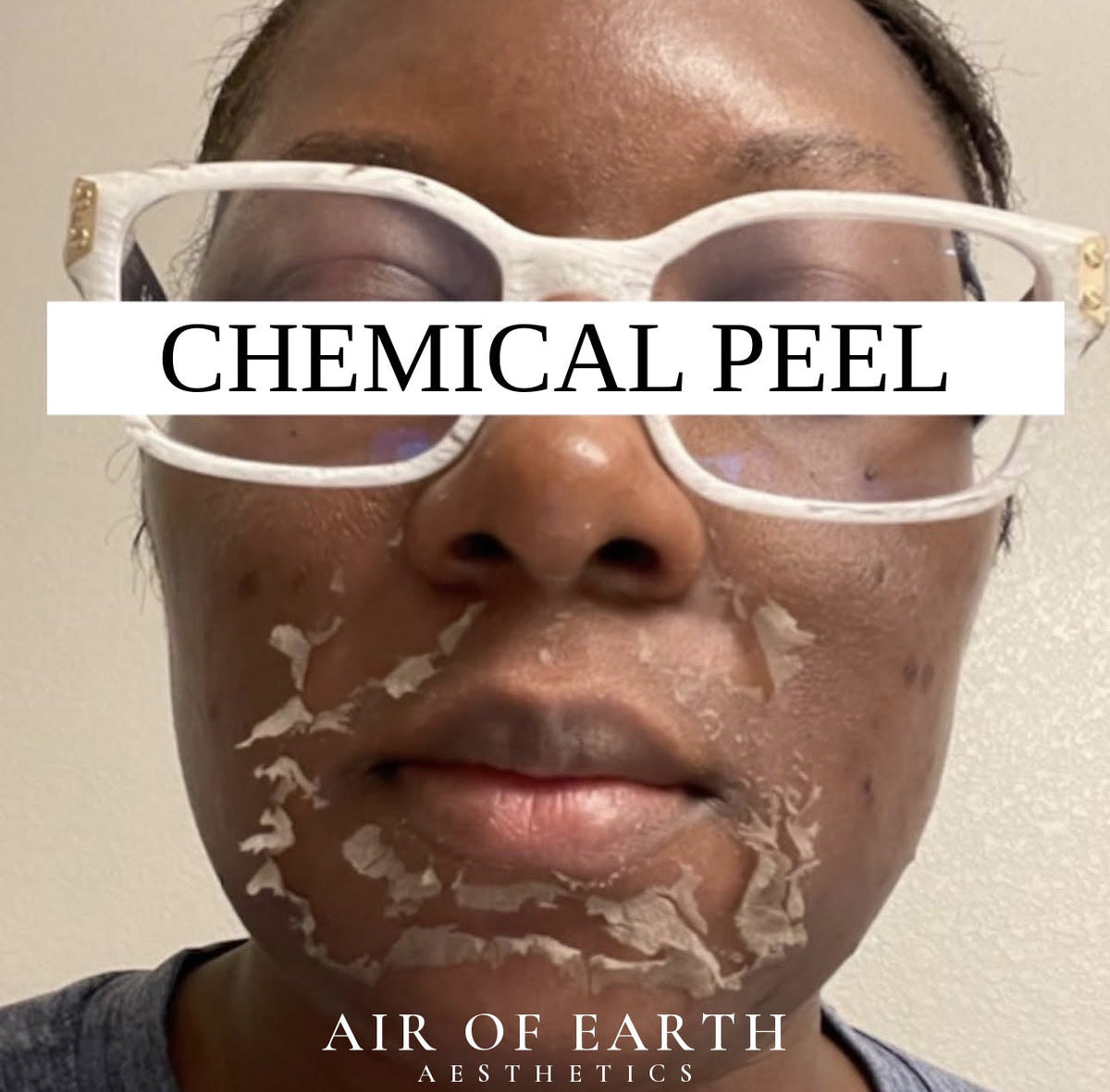
Can Black Skin Get Chemical Peels? What’s Actually Safe—and What Isn’t?
Yes, Black skin can get chemical peels. But choosing the right treatment and the right person to perform it matters.
If you’ve been told chemical peels aren’t for darker skin, that advice leaves out an important distinction: melanin-rich skin can benefit from a carefully selected peel, but an overly aggressive or poorly performed treatment can cause lasting pigment changes. The American Academy of Dermatology recommends seeing a dermatologist experienced in treating darker skin tones.
At Air of Earth Aesthetics, my approach starts with understanding your skin before deciding how to treat it.


Why does melanin matter?
Inflammation can leave behind dark marks known as post-inflammatory hyperpigmentation.You might recognize this as the discoloration that remains after a breakout, irritation, or injury.
A peel intended to improve uneven tone can create additional discoloration if it causes too much inflammation. Protecting your skin throughout treatment is part of treating the pigmentation itself.
What types of peels can be appropriate?
Select cold-peel formulations may be an option,depending on your skin, the ingredients, and the treatment protocol. However, “cold peel” alone doesn’t tell you how deeply or quickly a treatment works—or whether it’s appropriate for melanin-rich skin.
Your provider should assess the specific formula, treatment depth, and your skin’s condition before recommending it. The goal is controlled treatment that improves your concerns while minimizing unnecessary inflammation.
Research on superficial peels in darker skin has found relatively low complication rates, but complications still occurred. “Suitable for skin of color” should never be interpreted as “risk-free.”
What deserves caution—or a clear no?
Deep peels
Deep peels carry greater risks of lasting pigment changes and scarring and are generally avoided in darker skin tones. More aggressive treatment isn’t automatically the best way to reach your skin goals.
Unprimed skin
Preparation matters. Skin priming means preparing your skin for a chemical peel with a thoughtfully selected homecare routine.
Think of it like warming up before a workout: you’re preparing for what comes next. For your skin, that may include consistent hydration, sun protection, and targeted products selected to address pigmentation before treatment. Appropriate preparation can help improve results and reduce complications.
Priming should be personalized to your skin and the planned peel. Your provider should explain what to use, how long to prepare, and when to pause certain ingredients. It does not mean aggressively exfoliating at home or pushing through irritation.
Strong DIY peels
Buying a professional-strength acid online does not make it appropriate for home use. The FDA warns that chemical peels used without appropriate professional supervision can cause severe burns, scarring, and permanent skin injury. Concentration, repeated applications, and time on the skin all affect the risk.
A treatment without a thorough consultation
Your provider should review your current skincare, medications, previous procedures, cold sores, scarring history, and past reactions. You should understand why the peel was selected, what recovery involves, and whom to contact if something feels wrong.
Questions to ask before booking
-
How much experience do you have treating skin like mine?
-
Why is this particular peel appropriate for my concerns?
-
What is my risk of developing darker or lighter patches?
-
How should I prepare my skin?
-
What should I use—or pause—before and after treatment?
-
Who should I contact if my skin reacts unexpectedly?
A thoughtful consultation should leave you informed and comfortable with your treatment plan.
Aftercare is part of the treatment
Follow your provider’s instructions for cleansing, moisturizing, sun protection, and restarting active ingredients. Do not pick or pull peeling skin. Contact your provider if you develop burning, itching, or swelling rather than assuming every reaction is normal.
For people managing dark spots, broad-spectrum SPF 30 or higher is essential preferably mineral;Solar Defense is a great option. A tinted formula containing iron oxides can also help protect against visible light that contributes to hyperpigmentation.
Your skin deserves a plan that respects your melanin
Chemical peels can have a place in caring for Black skin. The right approach considers your skin’s condition, your history, the treatment selected, and how you care for your skin before and afterward.
At Air of Earth Aesthetics, we begin with a consultation to understand your skin, review your homecare, and discuss appropriate next steps—including dermatology referral when needed.
Ready to explore your options? Book a skin consultation through our website.
Air of Earth Aesthetics — The Alchemy to Healthy Skin.